Research
We combine organoid biology, quantitative imaging, and computational modeling to understand how living tissues acquire their form. Our work spans fundamental questions in developmental biology, the physics of morphogenesis, and methods development for the broader community.
01
Cardiac Organoids
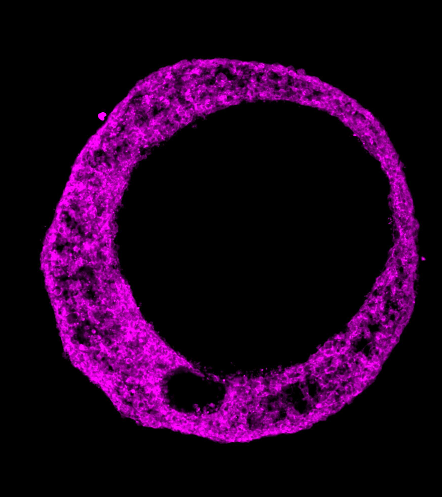
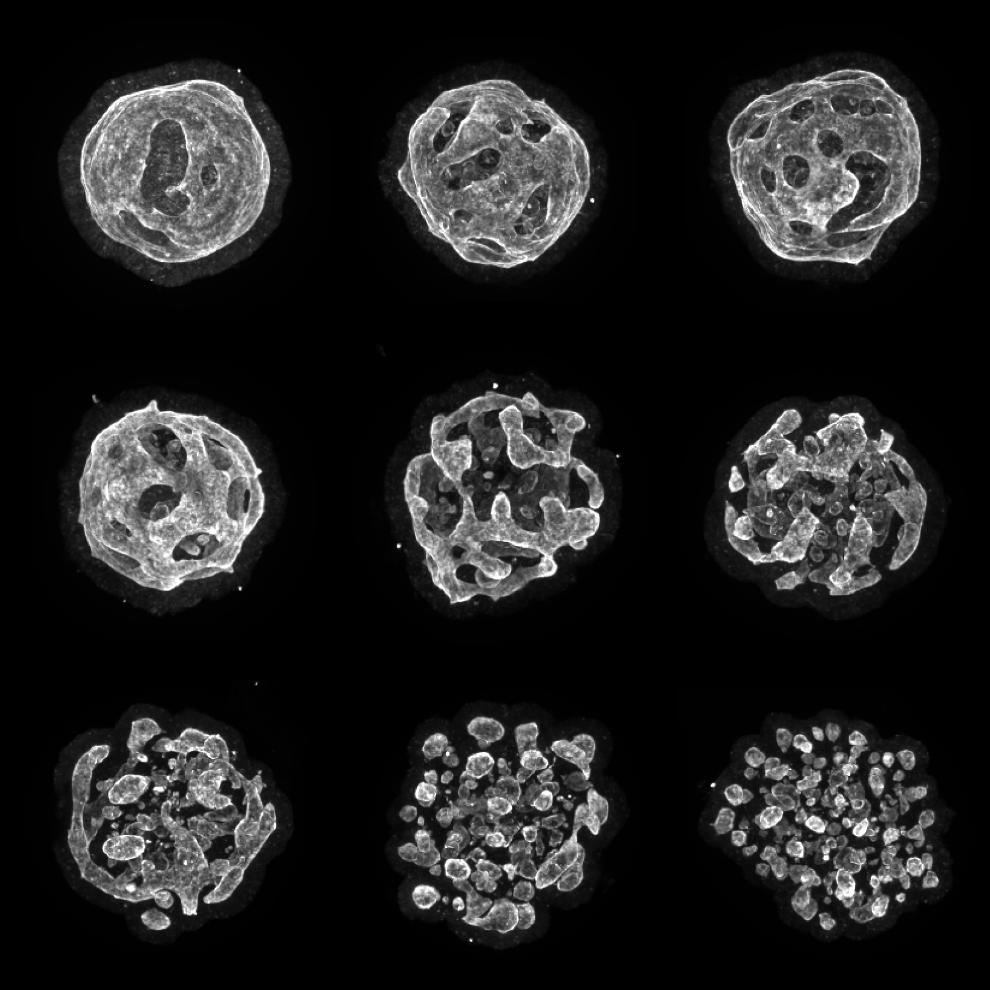
We engineer cardiac organoids (miniature self-organizing heart tissues) to study cardiac development, disease, and drug response. Combining stem cell biology with quantitative functional assays, we build experimental platforms that recapitulate human heart physiology at scale. Our long-term goal is to leverage these models for drug discovery and the study of congenital heart conditions.
02
Brain Organoids
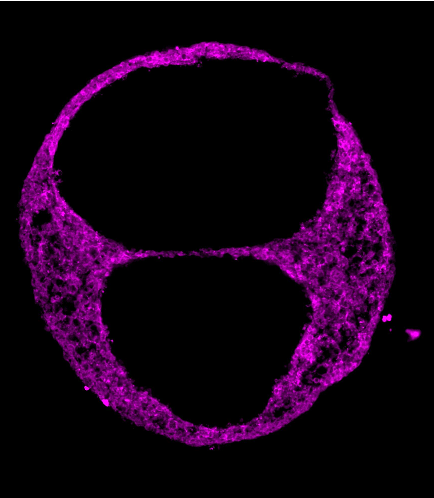
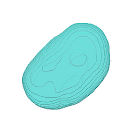
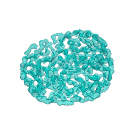
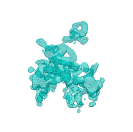
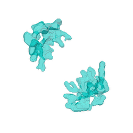
We use neuroepithelial organoids to investigate how the brain acquires its shape during early development. Quantitative 3D imaging and biophysical analysis reveal how cell mechanics and tissue geometry drive the emergence of neural structures. This work connects molecular-scale cell biology to the mesoscale physics of tissue organization.
03
Computational Methods
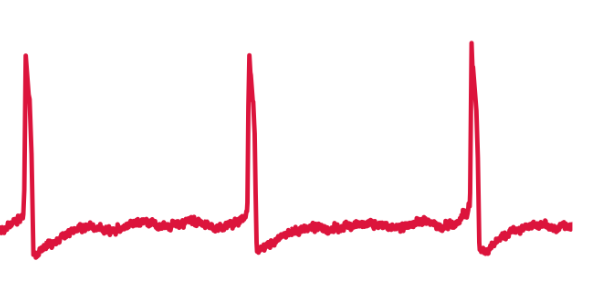
Biological data is inherently geometric and structured. We develop interpretable learning frameworks grounded in physical intuition, enabling better predictions from complex 3D imaging data and physiological recordings. Our methods span applications in research and clinical settings, and all tools are shared openly with the community.
04
Biological Physics
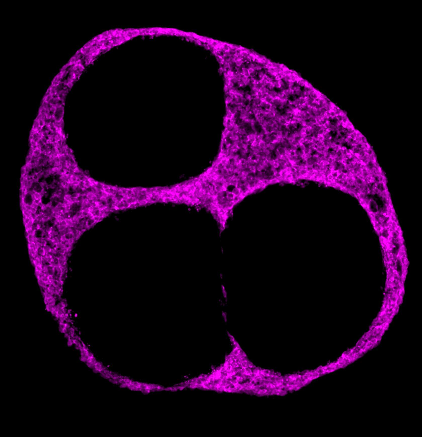
We investigate how physical forces (cell mechanics, surface tension, and osmotic pressure) govern the self-organization of cells into tissues. By applying controlled mechanical perturbations and measuring cellular responses with quantitative microscopy, we uncover the biophysical rules that drive tissue morphogenesis. This work bridges physics and biology to reveal universal principles of how form emerges from cellular behavior.
Our Toolkit
Live-cell & 3D confocal microscopy
Stem cell & organoid culture
Quantitative image analysis
Biophysical modeling & simulation